

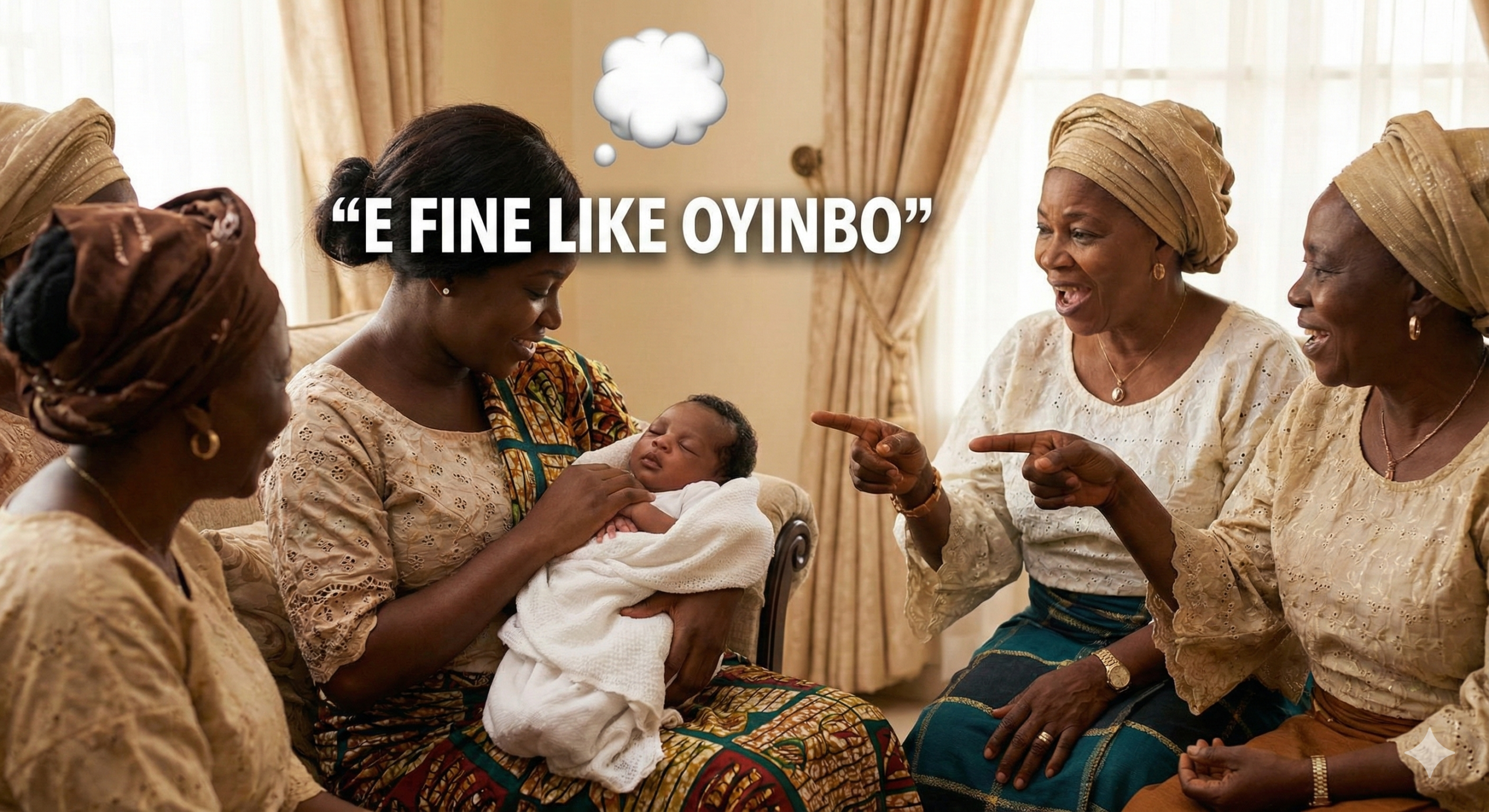

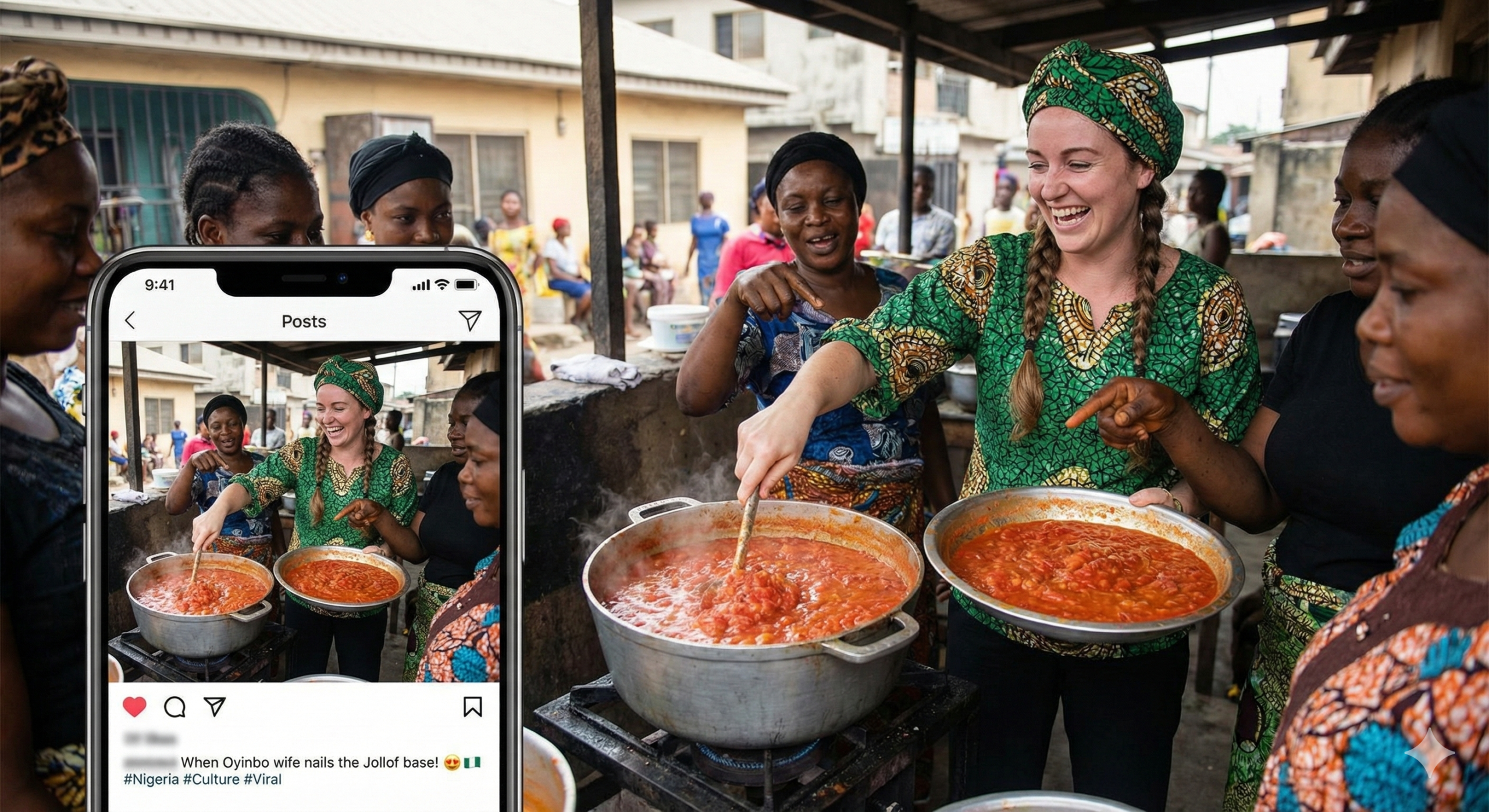
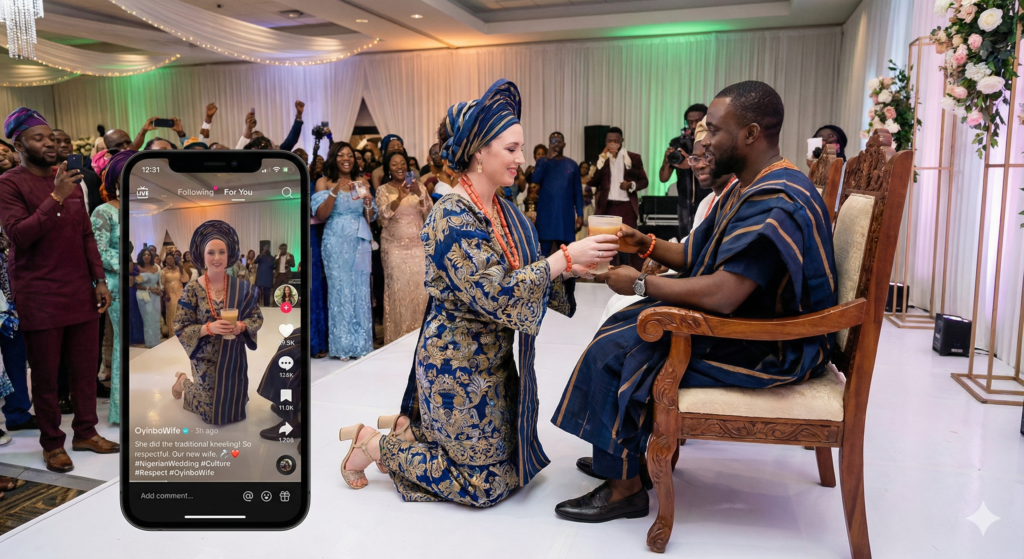
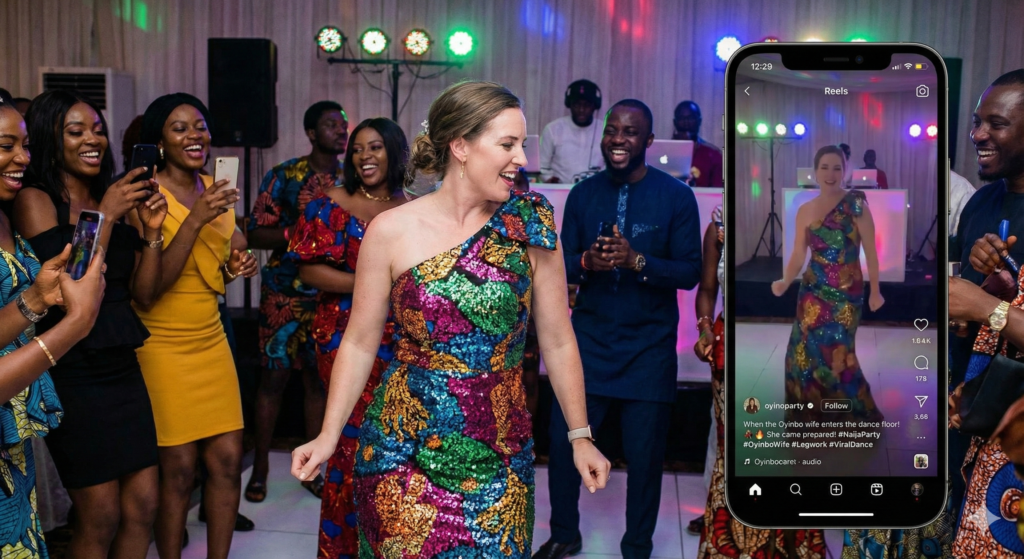
If you scroll through Nigerian social media for five minutes, you will inevitably hit a specific genre of viral content. It is usually a video of a white woman, likely from the West, seamlessly adapting to Nigerian life. She might be pounding yam, rocking effortless ankara, dancing to the latest Afrobeats, or performing traditional marriage rites. The engagement on these posts is almost always astronomical.
But I have noticed a stark disparity. When I see similar content featuring women from other African nations, like Ghana, Kenya, or South Africa, integrating into Nigerian culture, the reaction is completely different. It rarely gets the same traction.
Why is that?
I don’t think this imbalance is accidental. I believe it is rooted in a complex mix of deep cultural psychology, colonial history, and how the algorithms work. After watching the discourse unfold online, here is why I think this happens.
1. The Colonial Hangover and the Ultimate “Flex”
Let’s be honest about the elephant in the room. Like many post-colonial societies, Nigeria still grapples with a subconscious hierarchy where proximity to whiteness is equated with prestige and success. This isn’t always overt racism. Often, it manifests as internalized colorism and a craving for external validation.
When I see a white woman “choosing” a Nigerian man and enthusiastically embracing the culture, it reads as the ultimate validation of Nigerian masculinity. It sends a powerful message to the collective ego that says, “Even the people at the top of the global hierarchy want what we have.”
Conversely, a Ghanaian or Kenyan woman adapting to our culture doesn’t trigger this same “trophy” status. Her integration feels expected or familiar. It lacks the “conquest” narrative that seems to drive the virality of these interracial unions.
2. Visual Contrast and Exoticism
I also think we have to look at who is watching. For the core audience driving these views, a white woman fully immersed in Nigerian traditions represents peak exoticism. The viral factor relies heavily on visual contrast.
Think about the imagery. You have pale skin paired with perfect Jollof rice. You have a Western accent dropping Nigerian slang. You have blonde hair under a perfectly tied Gele.
This juxtaposition creates a novelty that triggers curiosity. It is visually striking. In contrast, a darker-skinned African woman from a neighboring country blends in visually. Her adoption of the culture feels natural rather than special, so it fails to trigger the psychological shock value that stops the scroll.
3. The “Perfect Wife” Fantasy
This is the messiest part of the dynamic. A significant driver of this content is the ongoing gender discourse in Nigerian online spaces. I constantly see narratives stereotyping Nigerian women, particularly from the South, as high maintenance or materialistic.
White women are often weaponized in these discussions as the antithesis. They are stereotyped as submissive, appreciative, and less financially demanding.
When a video shows a white woman happily submitting to tradition without complaint, it feeds a specific male fantasy of “peace of mind” that is allegedly scarce locally. These videos stop being just entertainment. They become motivational propaganda used to signal, “See? This is how a wife should treat her Nigerian husband.”
4. The Algorithm Loves Drama
Finally, we can’t ignore the tech itself. Social media platforms are designed to reward high arousal emotions like shock, aspiration, and controversy.
The “Oyinbo wife” content generates massive shares. It sparks heated debates in the comments. It stirs up national pride. It attracts curiosity from international viewers.
The Pan-African content, on the other hand, usually generates polite appreciation. People think it is cute, but it lacks the emotional charge or controversy required to go viral.
My Conclusion
The lopsided attention given to these videos is rarely just about love or cooking skills. In my view, it is a reflection of status symbolism, internalized hierarchies, and wish fulfillment fantasies.
The same psychology that has placed a premium on light skin in advertising and music videos for decades has simply evolved. Today, it manifests in the virality of the “ultimate light skin,” which is a Western woman happily assimilating into Nigerian life. While this doesn’t diminish the genuine relationships involved, it certainly explains why we remain captivated by one narrative while ignoring the other.

Leave a Reply