
History is not happening to Africa; it is happening around it.
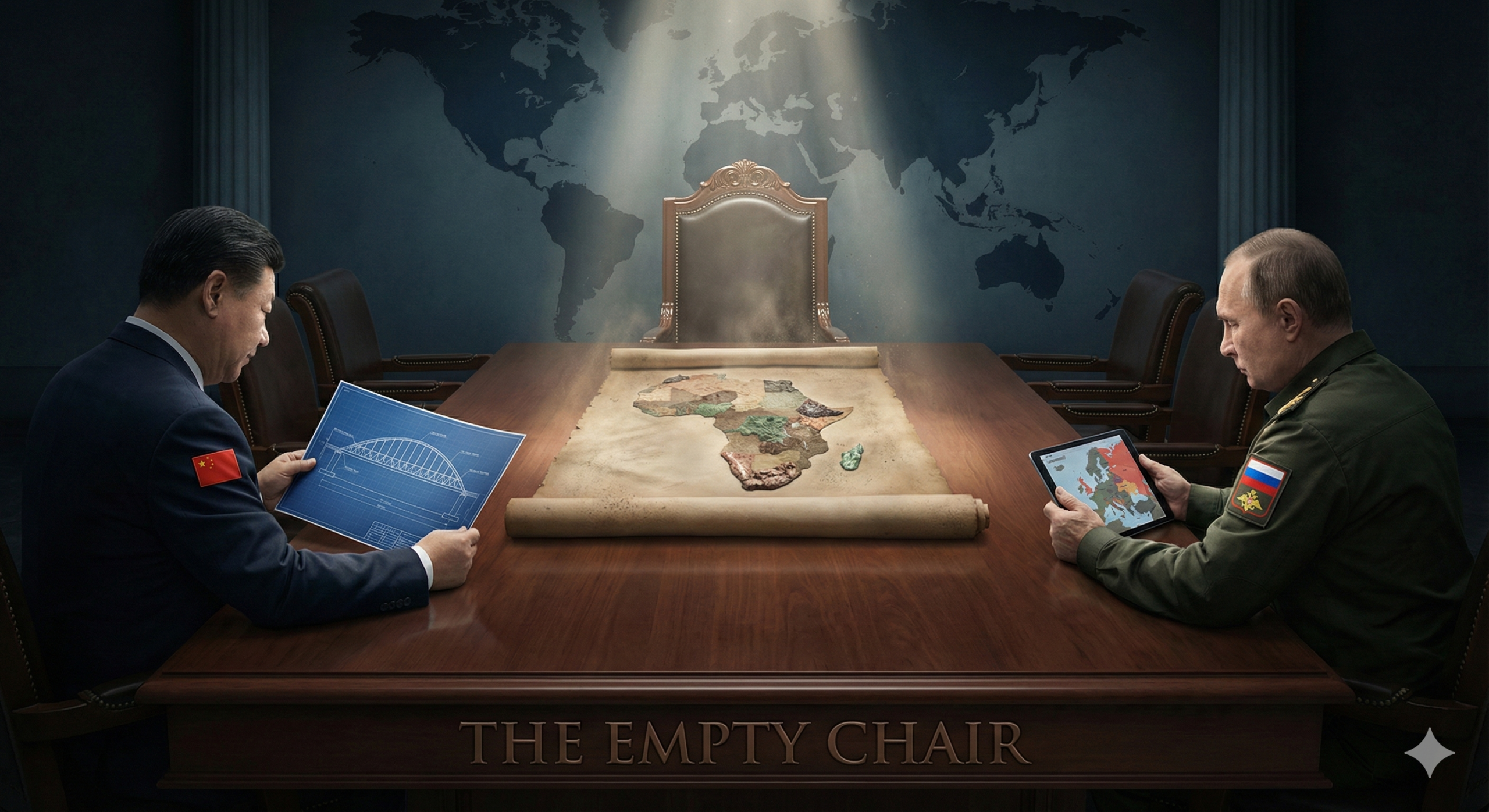
There is a popular, comforting lie that China and Russia are aggressively “winning” Africa. This suggests a contest between equals, a struggle for hearts and minds. But this is not a battle. It is a vacuum. Beijing and Moscow are not defeating African strategy; they are simply stepping into a space where no continental strategy exists.
The danger facing Africa today is not foreign interference. It is the asymmetry of vision. While foreign powers are playing chess with a view of the board fifty years from now, African leadership is too often playing checkers, focused only on the next election cycle.
The Architect and The Enforcer
To understand the stakes, we must look at what our partners actually see when they look at us.
China is playing the long game. When Beijing surveys the African landscape, they do not see poverty or instability. They see the industrial nervous system of the post-American world. They see the lithium, cobalt, and copper required to fuel the green energy transition. They see the ports that will dictate the flow of tomorrow’s commerce and the demographics that will consume tomorrow’s products.
China is not investing in the Africa of 2024. They are pouring concrete for the Africa of 2050. They are securing the inputs for a global economy they intend to command.
China builds the house it wants to own. Russia guards the gate it wants to control.
Russia is playing the chaos game. Moscow’s interest is far more tactical. They view Africa through the lens of entropy. Where there is a security vacuum, a fragile regime, or a sanctioned leader desperate for survival, Russia sees an opening.
They do not offer bridges or hospitals. They offer regime insulation. By trading security for resources and diplomatic cover for mining rights, Russia has perfected a model of low-cost, high-yield influence. They do not need Africa to be stable; in fact, their influence often thrives precisely where governance fails.
The 54-Fragment Problem
So where is Africa in this grand design?
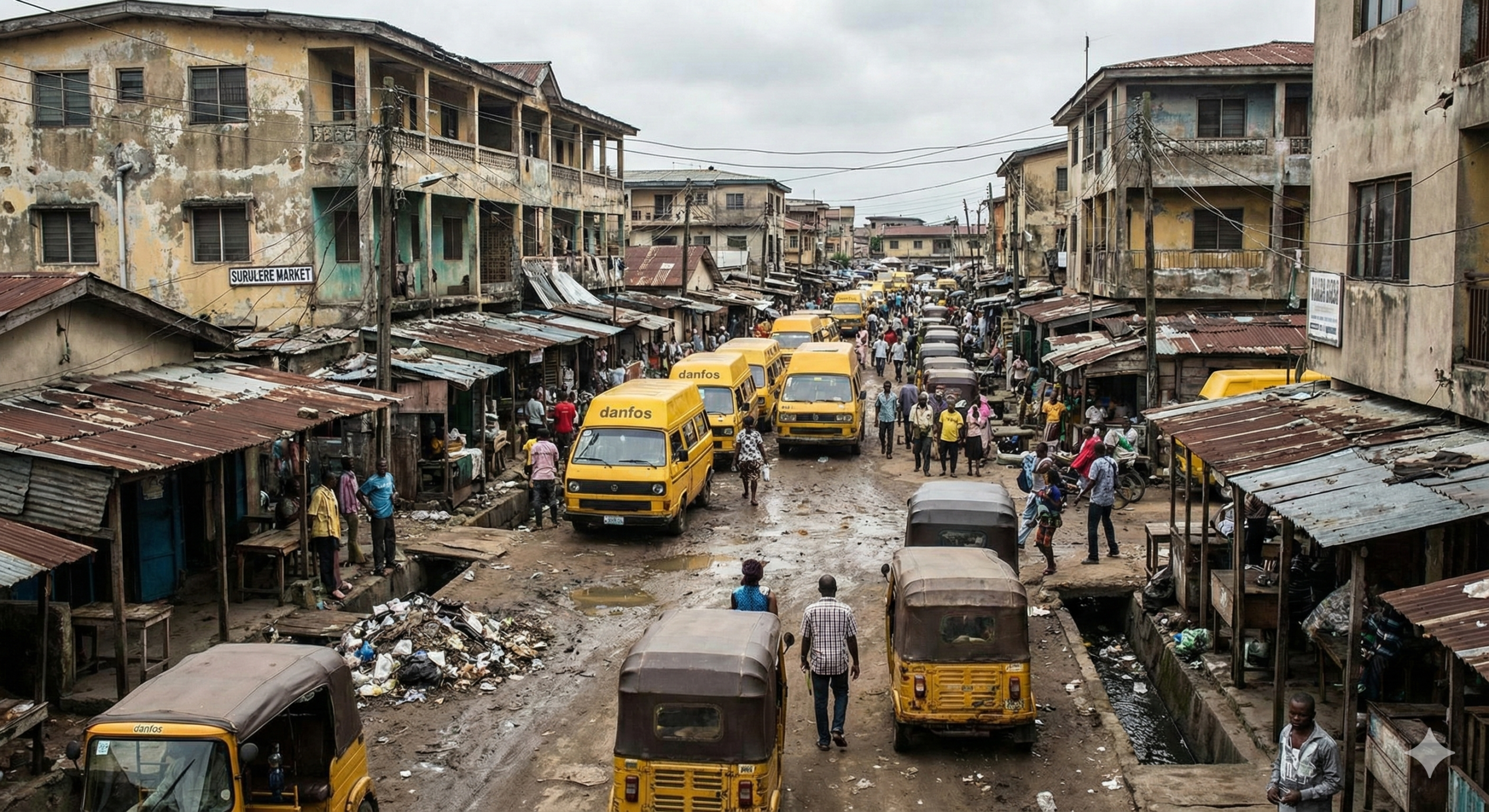
Caught in the middle, negotiating with a broken hand. The tragedy is that our institutions were designed for internal distribution, not external projection.
While our partners operate with generational continuity, African governance is plagued by chronic short-termism.
- Volatile Negotiators: We change our technical teams as often as we change our parliaments. There is no institutional memory.
- The Budget Trap: While China executes 10-year infrastructure master plans, African ministries are often shackled to 12-month budget cycles.
- The Race to the Bottom: A mining license in many African states can be obtained in weeks, often before the state has even mapped its own geological wealth. We are selling things before we know what they are worth.
The result is that outside powers rarely need to force the door open. They simply wait for us to leave it unlocked.
The Cost of Silence
The true catastrophe is not the presence of China or Russia. It is the absence of Africa.
We possess 40% of the world’s critical minerals, yet we behave like 54 desperate corner shops competing against each other, rather than a monopoly that dictates the price. No other entity controls so much of the future while holding so little of the present power.
The verdict is clear: Africa will not lose the 21st century because of an invasion. It will lose because it refused to plan.
To survive, the continent must stop asking what China and Russia want from Africa, and start defining what Africa demands from the world. We must move from being the chessboard to being a player. If we do not define the terms of our future, someone else has already written the contract.


Leave a Reply